
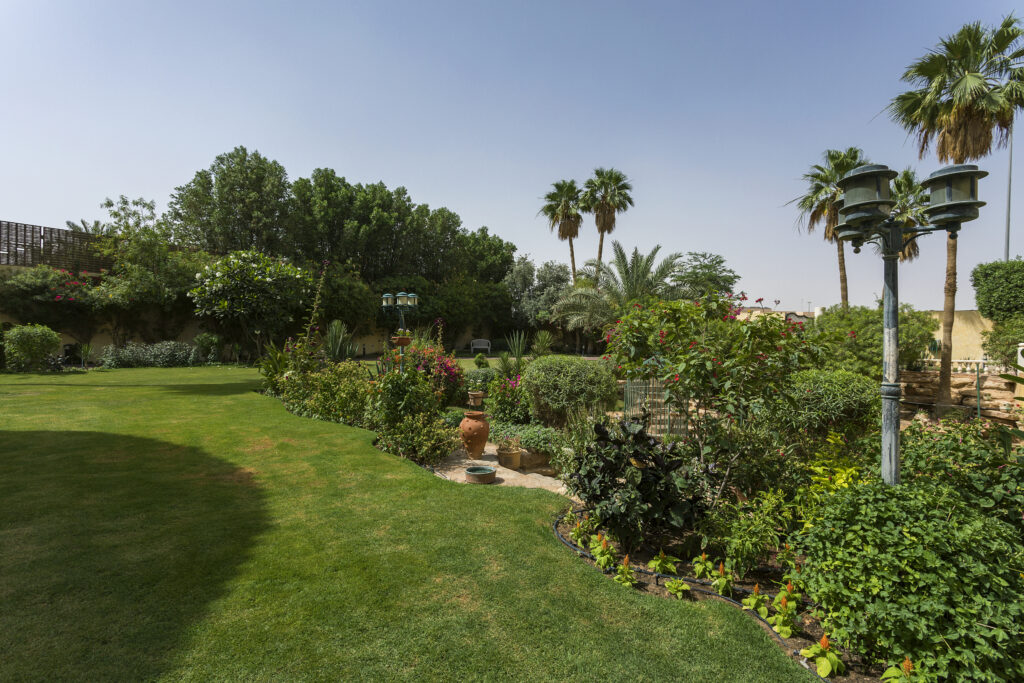
What Is Sustainable Softscape Landscaping?
Sustainable softscape landscaping focuses on designing, installing, and maintaining green spaces in a way that conserves resources while ensuring plant longevity. It integrates efficient soil management, climate-appropriate plant selection, smart irrigation systems, and low-impact maintenance practices.
Sustainability is not a single action—it is a system where all elements work together.
Why Sustainability Matters in Hot and Arid Regions
In regions with extreme heat and limited rainfall, traditional landscaping approaches often lead to:
-
Excessive water consumption
-
High plant failure rates
-
Increased maintenance and replacement costs
Sustainable landscaping addresses these challenges by adapting designs to environmental realities rather than working against them.
Soil Preparation as the Foundation of Sustainability
Healthy soil improves water retention, reduces irrigation demand, and strengthens root systems.
Sustainable soil strategies include:
-
Improving soil structure with organic matter
-
Enhancing drainage while retaining moisture
-
Reducing compaction to support root development
These practices build upon the principles discussed in proper soil preparation, which is essential for long-term landscape sustainability.
Sustainable Plant Selection for Harsh Climates
Choosing plants adapted to local climate conditions is one of the most effective sustainability strategies.
Sustainable plant selection focuses on:
-
Native and drought-tolerant plants
-
Species adapted to heat and high sun exposure
-
Plants with low water and maintenance requirements
This approach directly follows the methodology of choosing the right plants based on soil type and climate, reducing water use and plant replacement.
Water Conservation Through Smart Irrigation
Water efficiency is a cornerstone of sustainable softscape landscaping.
Sustainable irrigation strategies include:
-
Drip irrigation for targeted water delivery
-
Smart irrigation controllers using weather data
-
Zoning plants by water requirements
Efficient irrigation systems prevent water waste while maintaining plant health, as explained in irrigation systems and their role in softscape landscaping success.
Sustainable Maintenance Practices
Sustainability continues long after installation through responsible maintenance.
Best practices include:
-
Seasonal irrigation adjustments
-
Organic fertilization where possible
-
Preventive care instead of reactive replacement
Consistent care helps avoid the common softscape landscaping mistakes that often lead to resource waste and plant failure.
Sustainable maintenance also aligns closely with long-term landscape care principles discussed in softscape landscaping maintenance best practices.
Long-Term Environmental and Economic Benefits
Sustainable softscape landscaping delivers measurable benefits:
-
Reduced water and energy consumption
-
Lower long-term maintenance costs
-
Improved plant lifespan and visual quality
-
Positive environmental impact and regulatory compliance
For property owners and developers, sustainability is both an environmental responsibility and a financial advantage.
Conclusion
Sustainable softscape landscaping is the evolution of modern landscape design in hot and arid climates. By combining proper soil preparation, climate-appropriate plant selection, efficient irrigation systems, and responsible maintenance, landscapes become resilient, cost-effective, and environmentally sound.
Sustainability is not an option—it is the future of successful landscaping.