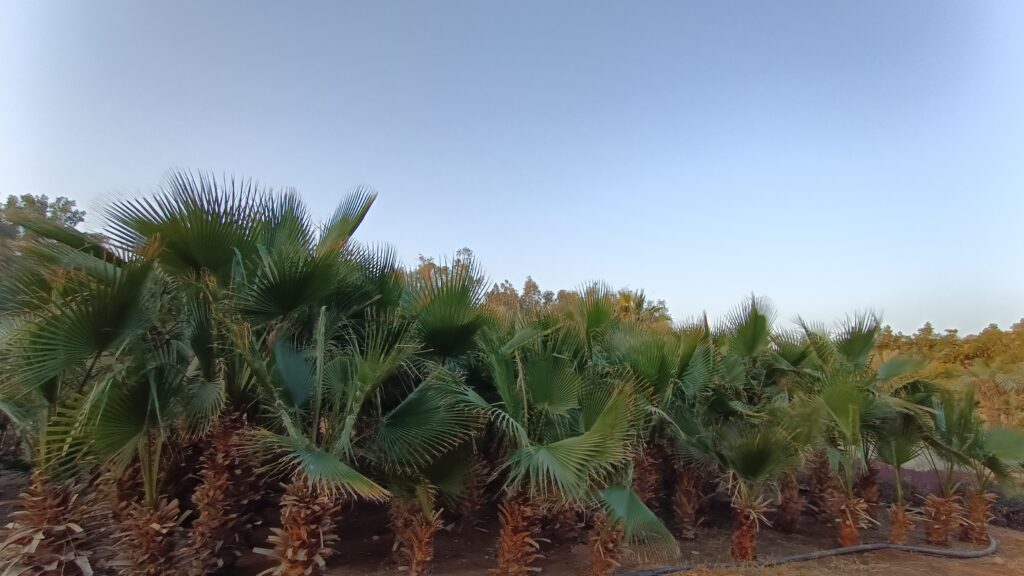
Washingtonia robusta and Washingtonia filifera are among the most popular palm trees used in landscaping across Riyadh. Their tall trunks, elegant fan-shaped fronds, and high heat tolerance make them ideal for streetscapes, villas, commercial projects, and large garden designs.
However, Riyadh’s extreme summer temperatures, sandy soils, and low rainfall require specific care strategies to ensure healthy growth and long-term stability.
Below are 10 professional tips to successfully grow Washingtonia trees in Riyadh’s desert climate.
1. Choose the Right Washingtonia Variety
Both Washingtonia robusta and Washingtonia filifera perform well in hot climates, but they differ slightly:
Washingtonia robusta grows taller and faster, making it ideal for avenues and large properties.
Washingtonia filifera is more cold-tolerant and has a thicker trunk.
For most landscaping projects in Riyadh, Washingtonia robusta is preferred due to its rapid growth and elegant appearance.
2. Select a Proper Planting Location
Washingtonia palms require:
Full sun exposure (minimum 6–8 hours daily)
Open space for vertical growth (they can exceed 20 meters)
Adequate distance from buildings and walls (at least 2–3 meters)
Avoid planting too close to foundations, underground utilities, or narrow walkways.
3. Improve Soil Quality Before Planting
Riyadh soil is typically sandy with low organic matter. Before planting:
Mix compost or organic manure into the soil
Ensure good drainage to prevent root rot
Add slow-release palm fertilizer during planting
Well-prepared soil encourages strong root establishment during the first year.
4. Follow a Smart Irrigation Schedule
Although Washingtonia palms are drought-tolerant once established, young trees require consistent watering.
Recommended irrigation plan in Riyadh:
First 3 months: 2–3 times per week
After establishment: Once weekly (adjust during extreme heat)
Avoid daily shallow watering — deep irrigation promotes stronger roots
Drip irrigation systems are highly recommended for landscaping projects.
5. Protect Young Trees from Extreme Heat
Summer temperatures in Riyadh can exceed 45°C. For newly planted palms:
Add mulch around the base (5–8 cm layer)
Use temporary shade cloth during peak heat waves
Ensure early morning irrigation
This reduces transplant shock and water stress.
6. Fertilize 2–3 Times Per Year
Use a balanced palm fertilizer rich in:
Nitrogen (N)
Potassium (K)
Magnesium (Mg)
Fertilize in early spring and late summer for optimal growth. Avoid over-fertilization, which may burn roots in hot soil.
7. Prune Correctly and Safely
Only remove:
Dead or completely brown fronds
Broken or damaged leaves
Avoid excessive pruning (also known as “hurricane cutting”), which weakens the palm and slows growth.
Professional pruning improves aesthetics and reduces pest risks.
8. Monitor for Pests and Diseases
Although Washingtonia palms are hardy, watch for:
Red palm weevil infestations
Fungal infections in overwatered soil
Nutrient deficiencies (yellowing leaves)
Routine inspection helps prevent serious structural damage.
9. Ensure Structural Stability
Due to their height, mature Washingtonia trees must develop strong root systems.
To improve stability:
Avoid frequent shallow watering
Do not compact soil around the trunk
Stake young palms temporarily if planted in windy areas
Proper anchoring during early growth prevents leaning or uprooting.
10. Work with a Professional Landscaping Company in Riyadh
Growing Washingtonia palms successfully in Riyadh requires climate-specific knowledge, proper irrigation design, and ongoing maintenance planning.
Professional landscaping companies can:
Select the right palm size for your project
Install efficient irrigation systems
Provide seasonal fertilization and pruning services
Monitor pest control
This ensures long-term health, safety, and visual appeal.
Why Washingtonia Trees Are Ideal for Riyadh Landscaping
Washingtonia palms are:
Highly heat-tolerant
Fast-growing
Low-maintenance once established
Visually impressive for residential and commercial properties
With proper care, these trees can thrive for decades in Riyadh’s desert environment.