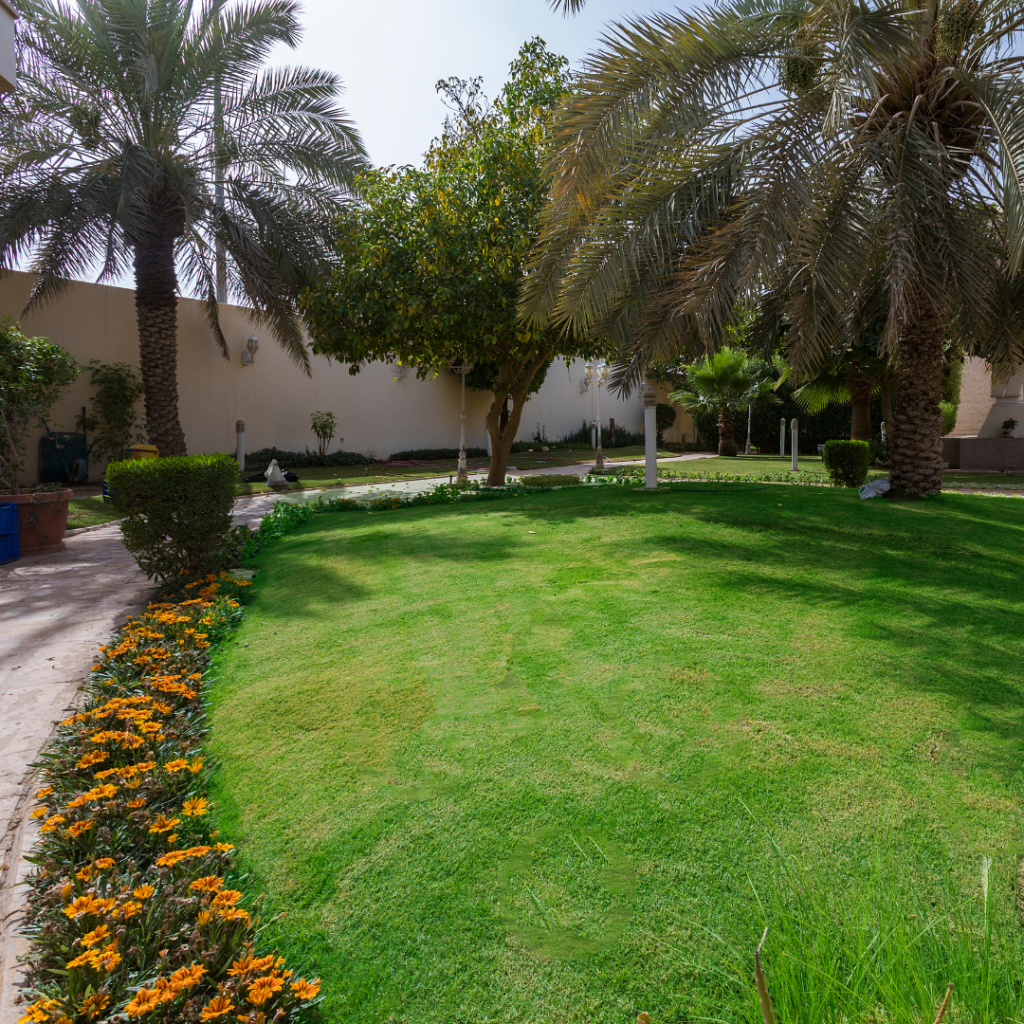
Choosing the right plants for your outdoor space in Saudi Arabia is one of the most important decisions you’ll make — and one of the most commonly misunderstood. Many homeowners and businesses invest in beautiful gardens, only to watch their plants wither within a few weeks because they weren’t suited to Riyadh’s harsh climate.
The good news? Saudi Arabia is home to and perfectly compatible with a stunning range of plants that thrive in heat, require minimal water, and look absolutely beautiful year-round. You just need to know which ones to choose.
In this guide, we’ll walk you through the best plants for outdoor spaces in Saudi Arabia, organized by type, so whether you’re designing a villa garden, a commercial entrance, a rooftop terrace, or a public plaza, you’ll know exactly what to plant — and why.
Understanding Riyadh’s Climate Before You Plant
Before selecting any plant, it’s essential to understand what you’re working with. Riyadh sits in the heart of the Arabian Peninsula and has one of the most extreme climates in the world:
- Summers: Temperatures regularly exceed 45°C, with intense direct sun and very low humidity
- Winters: Mild and pleasant, with temperatures dropping to 8–15°C at night between December and February
- Rainfall: Extremely low — Riyadh receives an average of just 100mm of rain per year
- Soil: Sandy and low in nutrients, with poor water retention
- Wind: Frequent dust storms, especially in spring, that can stress sensitive plants
The plants that succeed here are those adapted to heat, drought, and sandy soils. Trying to grow moisture-loving or cold-climate plants in Riyadh without significant intervention is a losing battle. Work with the climate, not against it — and your garden will reward you.
1. Trees: Shade, Structure, and Grandeur
Trees are the backbone of any outdoor space. In Riyadh, where shade is not just aesthetic but genuinely essential for comfort, choosing the right trees is critical.
Date Palm (Phoenix dactylifera) — نخيل التمر
The date palm is the king of Saudi landscaping — and for good reason. It is deeply rooted in Saudi culture, extraordinarily heat-tolerant, and requires very little water once established. Date palms provide excellent shade, create an iconic silhouette, and can live for over 100 years. They work beautifully in both residential gardens and grand commercial entrances.
Best for: Entrances, open lawns, avenue planting, large commercial spaces
Ghaf Tree (Prosopis cineraria) — الغاف
The Ghaf is one of the most drought-resistant trees on the planet. Native to the Arabian Peninsula, it has deep roots that access underground water, meaning it can survive with minimal irrigation once mature. It provides light, feathery shade and has a naturally beautiful structure.
Best for: Large gardens, parks, roadside planting, sustainable landscape projects
Sidr Tree (Ziziphus spina-christi) — السدر
The Sidr is a beloved native tree that produces small, sweet fruits and provides dense shade. It is fast-growing, extremely heat-tolerant, and resistant to drought and poor soils. It also holds significant cultural and religious importance in Saudi Arabia, making it a meaningful choice for any landscape.
Best for: Residential gardens, schools, mosques, community spaces
Acacia Tree (Acacia tortilis) — السمر
The umbrella-shaped Acacia is a striking tree that creates wide, flat canopies perfect for shading outdoor seating areas. It is native to the Arabian Peninsula and thrives in sandy soils with minimal water. Its feathery leaves and dramatic shape make it a designer favorite for modern commercial landscapes.
Best for: Outdoor dining areas, courtyards, commercial landscapes, resort gardens
Neem Tree (Azadirachta indica) — النيم
The Neem tree is a fast-growing evergreen that provides dense, year-round shade. It is highly tolerant of heat and drought, and its natural pest-repelling properties make it a practical as well as beautiful addition to any garden.
Best for: Residential gardens, schools, hospitals, parking shade structures
2. Shrubs: Color, Structure, and Privacy
Shrubs are the workhorses of the landscape — they provide color, define boundaries, screen views, and fill space beautifully. These are the top performers for Saudi Arabia’s climate.
Bougainvillea — البوغنفيليا
If there is one plant that defines the look of a vibrant Saudi garden, it is Bougainvillea. This spectacular flowering climber and shrub explodes with color — pink, red, orange, purple, and white — and it absolutely loves heat. In fact, it blooms more vigorously under stress. It requires very little water once established and grows rapidly.
Best for: Walls, fences, pergolas, entrances, commercial facades
Oleander (Nerium oleander) — الدفلى
Oleander is one of the toughest shrubs available for Riyadh landscapes. It tolerates extreme heat, drought, poor soil, and strong winds — and still produces beautiful clusters of flowers in pink, red, white, or yellow. It is widely used as a privacy hedge, roadside planting, and border shrub.
Best for: Hedges, perimeter borders, roadside planting, large commercial grounds (Note: all parts of oleander are toxic if ingested — plant with care in family or children’s spaces)
Lantana — اللنتانا
Lantana is a cheerful, low-growing shrub that produces small clusters of brightly colored flowers in orange, yellow, pink, and red. It thrives in full sun and high heat, attracts pollinators, and requires very little maintenance. It is excellent as a ground cover or low border plant.
Best for: Ground cover, border planting, garden color, low maintenance areas
Plumbago — الرصاصية الزرقاء
Plumbago is a spreading shrub that produces delicate sky-blue flowers nearly year-round in Riyadh’s climate. It is shade-tolerant (rare among heat-hardy plants), making it ideal for planting under larger trees or in partially shaded corners of the garden.
Best for: Under trees, shaded borders, garden beds, mixed shrub planting
Rosemary (Salvia rosmarinus) — إكليل الجبل
Rosemary is a fragrant, evergreen herb-shrub that performs surprisingly well in Riyadh’s dry heat. Its silver-green foliage and small blue flowers add texture and aroma to any garden, and it requires minimal irrigation once established. A wonderful choice for sensory gardens, villa entrances, and kitchen garden areas.
Best for: Entrance borders, herb gardens, sensory spaces, low water zones
3. Ground Covers: Filling Space and Controlling Erosion
Ground covers are low-growing plants that spread across the soil, reducing weeds, preventing erosion, and filling spaces between larger plants beautifully.
Portulaca (Moss Rose) — البورتولاكا
Portulaca is a heat-loving annual ground cover that produces brilliant, jewel-toned flowers in shades of red, orange, yellow, and pink. It thrives in full sun and sandy soil, and blooms prolifically throughout the hot summer months when many other plants struggle. It is one of the best choices for adding summer color to Riyadh gardens.
Best for: Sunny garden beds, rock gardens, borders, container planting
Gazania — الغازانيا
Gazania produces large, daisy-like flowers in warm tones of orange, yellow, and bronze. It is extremely drought-tolerant and sun-loving, and works beautifully as a low-maintenance garden bed filler. Its flowers close at night and reopen with the morning sun — a charming feature in any garden.
Best for: Garden beds, slopes, border edging, low-maintenance color areas
Dichondra — الديكوندرا
Dichondra is a low-growing, spreading ground cover with small, round leaves that create a soft, carpet-like effect. The silver-leaved variety (‘Silver Falls’) is particularly dramatic in containers and hanging baskets, while the green variety works well as a lawn alternative in shaded areas.
Best for: Lawn alternatives, hanging baskets, garden edges, shaded areas
4. Grasses and Ornamental Plants: Texture and Movement
Grasses and ornamental foliage plants add a different dimension to a landscape — movement, texture, and year-round structure without relying on flowers alone.
Bermuda Grass (Cynodon dactylon) — العشب البرمودي
Bermuda grass is the most widely used lawn grass in Saudi Arabia for good reason. It is extremely heat and drought tolerant, recovers quickly from foot traffic, and maintains its green color throughout the long summer. It does go dormant and turn brown in the coolest winter months, but bounces back rapidly in spring.
Best for: Lawns, sports fields, parks, residential gardens
Fountain Grass (Pennisetum setaceum) — حشيشة النافورة
Fountain grass is an ornamental grass that forms beautiful arching clumps of feathery plumes. The purple-leaved variety (‘Rubrum’) is particularly striking and is widely used in modern commercial landscape design in Riyadh. It is heat and drought tolerant and requires minimal maintenance.
Best for: Garden borders, commercial planting, contemporary design, mass planting
Agave — الصبار الأمريكي
Agave plants are bold, architectural succulents that make a dramatic statement in any landscape. They are virtually indestructible in Riyadh’s climate — requiring almost no water and tolerating extreme heat. Their sharp, spiky form adds a contemporary, desert-inspired look that pairs beautifully with stone and hardscape.
Best for: Modern gardens, commercial spaces, rock gardens, dry landscape areas
5. Climbing Plants: Walls, Pergolas, and Vertical Spaces
Vertical planting is one of the most effective ways to add greenery to a commercial or residential space without using ground area.
Jasmine (Jasminum sambac) — الياسمين
Arabian jasmine is a beloved flowering climber that produces intensely fragrant white flowers. It thrives in Riyadh’s heat and is one of the few climbing plants that performs well in the Saudi climate. The scent of jasmine in an outdoor space is an unforgettable sensory experience.
Best for: Pergolas, fences, walls, outdoor seating areas, villa gardens
Cat’s Claw Vine (Macfadyena unguis-cati) — كرمة مخلب القط
Cat’s claw vine is a fast-growing, robust climber that produces bright yellow flowers and clings firmly to walls and fences. It tolerates heat extremely well and provides excellent coverage for boundary walls and pergola structures.
Best for: Boundary walls, pergolas, shading structures, privacy screening
Tips for Planting Success in Saudi Arabia
Regardless of which plants you choose, following these practical guidelines will give your landscape the best possible start:
Improve your soil before planting. Add organic compost and sand-breaking amendments to give roots a better growing medium. Sandy soil drains too fast and retains no nutrients on its own.
Install a drip irrigation system. Drip irrigation delivers water directly to the root zone, reducing evaporation and water waste. It is the gold standard for Saudi landscapes.
Water deeply and less frequently. Frequent shallow watering encourages shallow roots. Deep, infrequent watering trains roots to grow down — making plants far more drought-resilient.
Plant in autumn or early spring. Avoid planting in the peak summer heat (June–August). The cooler months give new plants time to establish their root systems before facing extreme temperatures.
Mulch around your plants. A 5–8cm layer of organic mulch around plants reduces soil temperature, retains moisture, and suppresses weeds — all critical benefits in Riyadh’s climate.
Group plants by water needs. Separate high-water plants from drought-tolerant ones so your irrigation system can serve each group efficiently.
Conclusion
Saudi Arabia’s climate is challenging — but it is far from limiting. With the right plant selection, proper soil preparation, and a smart irrigation system, it is absolutely possible to create lush, beautiful, and sustainable outdoor spaces that thrive through even the hottest Riyadh summers.
The secret is working with nature rather than against it. Choose plants that are adapted to heat and drought, give them a good start with quality soil and irrigation, and maintain them regularly — and your outdoor space will be a source of beauty and pride for years to come.
Want a Custom Plant Plan for Your Space?
Our professional team in Riyadh designs tailored plant plans for villas, commercial properties, and outdoor spaces of every size. We’ll assess your space, soil, sun exposure, and vision — and recommend exactly the right plants to create the garden of your dreams.